
In a groundbreaking development that marks a new chapter in brain-computer interface (BCI) technology, Elon Musk's Neuralink has successfully demonstrated a macaque monkey named "Kaoru" controlling a computer game purely through thought, using the company's latest N1 brain chip implant.
During a live demonstration streamed from Neuralink's research facility in Fremont, California, viewers watched as Kaoru — a nine-year-old male macaque — sat calmly in front of a monitor displaying the classic game Pong. Without touching any physical controller or joystick, the monkey moved the paddle up and down with remarkable precision, tracking the ball and scoring points consistently for over six minutes of uninterrupted gameplay.
About Kaoru
"Kaoru" is a nine-year-old macaque (Macaca fascicularis) who has been part of Neuralink's primate research program since 2024. He received his N1 brain chip implant six weeks ago in a minimally invasive surgical procedure lasting approximately four hours. Since then, Kaoru has shown rapid adaptation to the neural interface, progressing from simple cursor movements to full game control within just three weeks.
Technology Details
The N1 chip implanted in Kaoru's motor cortex contains over 1,024 electrodes — each thinner than a human hair — that record neural activity with sub-millisecond precision. The data is transmitted wirelessly to a nearby receiver, where custom algorithms decode Kaoru's intended movements in real time. Engineers reported that the system achieves a decoding latency of less than 15 milliseconds, meaning the on-screen paddle responds almost instantaneously to Kaoru's thoughts.
According to Neuralink's chief neuroscientist Dr. Matthew MacDougall, the breakthrough with Kaoru represents a significant leap forward from previous demonstrations. "What makes Kaoru's case exceptional is the stability of the signal over weeks of continuous use. The chip has maintained consistent performance without any degradation, and Kaoru shows clear signs of enjoying the gaming sessions — he actively seeks out the testing station each morning."
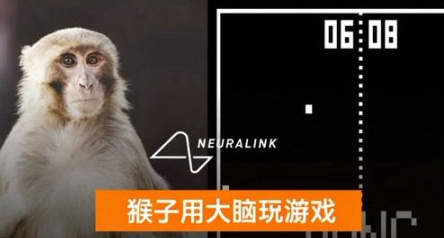
Close-up of Kaoru during the Pong demonstration. The Neuralink logo is visible as the neural decoding dashboard displays real-time brain activity data alongside the game interface.
Technical Specifications
- 1,024 ultra-thin electrodes implanted in motor cortex
- Sub-15ms decoding latency for real-time control
- Wireless data transmission at 200Mbps
- 6+ weeks of stable signal without degradation
- Minimally invasive robotic surgical implantation
Implications for Human Medicine
Neuralink emphasized that the success with Kaoru directly paves the way for human clinical trials. The company has already received FDA approval for its first human study, and the Kaoru experiment demonstrates that the latest generation of the N1 chip can maintain long-term stability in a primate brain — a critical prerequisite for human implantation. Patients with paralysis, spinal cord injuries, and neurodegenerative diseases like ALS could potentially benefit from this technology within the next few years.
Elon Musk commented on social media that Kaoru is "the happiest, healthiest monkey you've ever seen" and confirmed that the company plans to begin its first human implantation procedures later this year. "Kaoru has changed everything," Musk wrote. "The signal clarity and stability we're seeing is beyond what we hoped for. This gives us enormous confidence for human trials."
Key Takeaways
- Neuralink's monkey "Kaoru" successfully played Pong for over 6 minutes using only brain signals from the N1 chip.
- The N1 chip achieved sub-15ms decoding latency with 1,024 electrodes, maintaining stable signal quality for over 6 weeks.
- Kaoru adapted from basic cursor control to full game control in just 3 weeks after implantation.
- This breakthrough directly supports Neuralink's upcoming FDA-approved human clinical trials.
- Potential applications include treatment for paralysis, spinal cord injuries, and neurodegenerative diseases.